
 Share on bsky
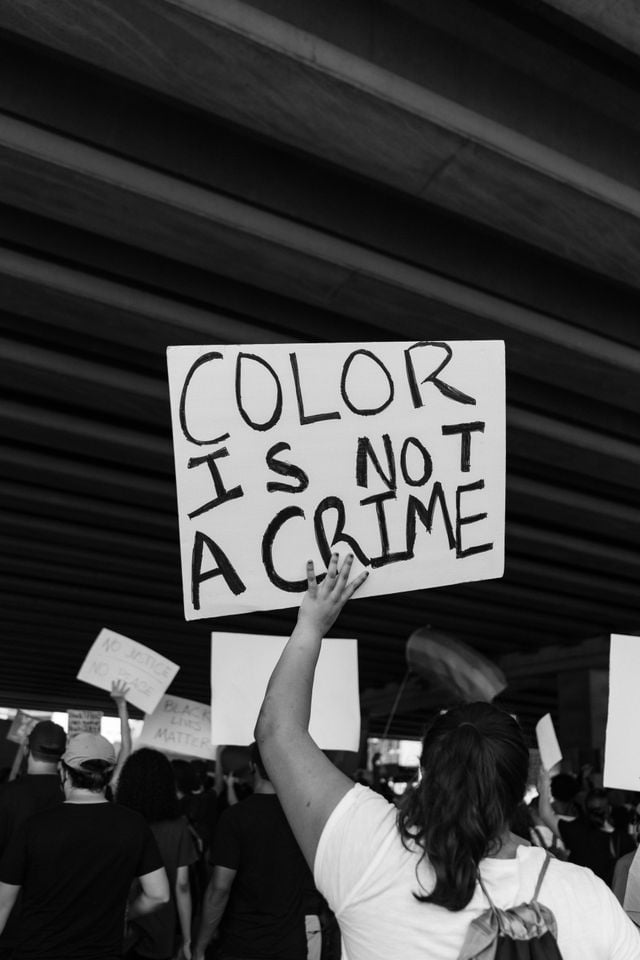
{Editor’s Note: Want to dig deeper? We’ve got you covered. Watch an anti-racism hour with Jane Elliott talking with Waylon Lewis of Elephant, here.}
Earlier this week, I started a new-to-me podcast series, The Girlfriends: “Untouchable,” Season Four.
My attention was rapt, as any good investigative podcast should have its listeners.
This one felt different, though.
The podcast tells a deeply intertwined story of racism, violence, sexual abuse, drug use, police corruption, and murder spanning decades in Kansas City, Kansas. But that’s not all it’s about.
It’s also about the systematic oppression and exploitation of the Black community. It’s about the women who refused to let those stories stay buried. What struck me most was the undertone of hope despite the horrors. The resilience of the community felt impossible to ignore.
As a true-crime consumer, I was shocked that I’d never heard of these cases before.
Then I remembered I hadn’t learned about the Tulsa Race Massacre until my twenties either.
Or Rosewood.
Or Seneca Village.
Every one of those stories found me through podcasts, documentaries, books, or my own curiosity.
Not school.
Certainly not Florida public schools.
In fact, Florida seems increasingly committed to making sure uncomfortable parts of American history stay exactly that: uncomfortable, hidden, and easy to ignore.
So what does any of this have to do with Juneteenth?
Today at work, a few of us were talking about getting paid a day early because of the holiday. Someone said, “It would be nice if we were off tomorrow.”
I agreed and said, “It would. If white people had ever been slaves, I’m sure we would be.”
Someone almost immediately responded, “White people have been slaves.”
There was more after that, but I’d already stopped listening.
Not because I was offended just…
surprised.
I consider myself a reasonably intelligent person, and I genuinely didn’t know whether that was true.
So I Googled it.
Google confirmed that yes, white people have been enslaved throughout various points in history. Ancient Greece and Rome. The Ottoman Empire. North Africa centuries ago.
As I sat with this new information, I came to a conclusion:
As a white person, I couldn’t care less about this new information.
Learning this changed absolutely nothing about how I think about Juneteenth.
Because Juneteenth is not about proving that only Black people have suffered.
It’s not a contest.
Nor a trivia question.
It’s not a “gotcha.”
June 19, 1865.
More than two years after the Emancipation Proclamation.
It was the day the last enslaved people in Galveston, Texas were finally informed that they were free.
And then what?
Segregation.
Voter suppression.
Redlining.
Lynchings.
Another hundred years of being denied equality after finally being granted freedom.
It’s barely been sixty years since the Civil Rights Movement.
Sixty years.
My parents were alive for that.
Many of the people who fought for those rights are still alive.
Many of the people who fought against them are too.
Yet somehow we’re expected to talk about racism like it’s ancient history.
Like America wasn’t built on the backs of enslaved people.
Like generations of discrimination simply disappeared because legislation changed.
As a white woman, there are realities I don’t have to think about.
If I walked out of a store with stolen diapers, I doubt anyone would see me as a threat before they saw me as a person.
If I’m pulled over, my race is unlikely to make that interaction more dangerous.
Those aren’t accomplishments.
And pretending otherwise feels dishonest.
I see people asking why Juneteenth matters.
I still see people questioning whether Black Lives Matter.
I still see people treating conversations about race like they’re optional.
Off the top of my head, I can flip through names.
Emmett Till.
James Byrd Jr.
George Floyd.
Kendrick Johnson.
Breonna Taylor.
Trayvon Martin.
Ahmaud Arbery.
Tamir Rice.
That’s just off the top of my head.
There are so many more.
As I found myself scrolling through a Wikipedia list of victims of racial violence,
I kept scrolling,
and scrolling.
Eventually, I started crying.
Not because any of it was new information.
Because it was impossible to look away.
Juneteenth is the bare minimum.
Recognize the history.
Honor the people who endured it.
Tell the truth about what happened.
Then tell the truth about what happened after.
And maybe most importantly: tell the truth about what is still happening now.
We haven’t done enough.
We aren’t mad enough.
~
If this touched your heart, you may also enjoy this Elephant Classic:
 Read 1 Comment and Reply





Read 1 comment and reply